Sunnyvale + surrounding Santa Clara County communities Open daily, 7:00 a.m.–9:00 p.m. 5.0 from 51 Google reviews

Rain and debris protection

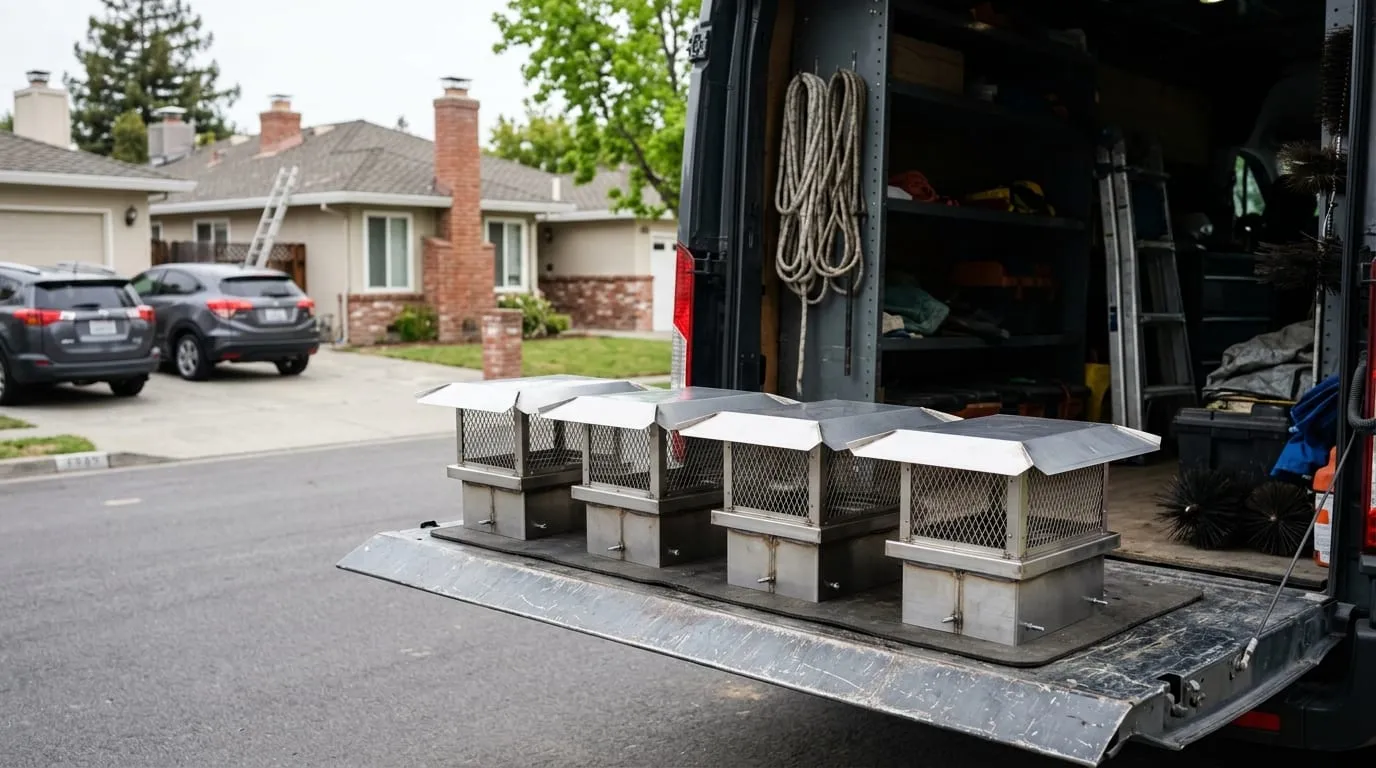
Chimney caps measured for the flue below them

A chimney cap is a small component with an exposed job. It has to cover the flue, shed rain, resist wind, allow venting, and help limit leaves or animals from entering. A rusted, loose, undersized, or missing cap can affect the system below it.

New black chimney cap installed on a tan stucco residential chimney
Owner-supplied project photo · Chimney Caps

Nation Wide Chimney Sweep & Repair has documented owner-supplied cap inspection, measurement, and replacement work in Sunnyvale. Cap selection begins with the existing flue dimensions and chimney condition rather than a one-size-fits-all assumption.

What this service helps you do

The goal is a defined service tied to observable conditions. It is not a promise that one appointment can correct every concealed, structural, appliance, or roof-related issue.

Rain deflection

A correctly fitted cover helps limit direct rain entry into the flue opening.

Debris and animal screening

Appropriate mesh can help reduce entry by leaves, nesting material, and some wildlife.

Component protection

Keeping direct exposure off the opening can support the condition of the flue and nearby masonry.

Common starting points

Projects that may fit this service.

Common project types

  • Replacement of a rusted or damaged chimney cap
  • Measurement and fit review for an uncovered flue
  • Multi-flue and custom-sized cap planning
  • Mesh and rain-cover condition assessment
  • Cap review after wind, wildlife activity, or water entry

Plan before the visit

  • Share photos or details about the existing cap only as a starting point; final measurements should be taken at the chimney.
  • Mention active leaks, animal sounds, recurring debris, rust stains, or a cap that moves in wind.
  • Do not use an improvised cover. Blocking or restricting the venting path can create a serious hazard.

Typical project scope

What the appointment may involve.

The flue shape, dimensions, crown condition, venting requirements, attachment method, and surrounding roof access are reviewed before a cap is selected.

A cap cannot correct a cracked crown, damaged liner, failed flashing, or structural masonry problem. Those conditions are documented and separated into an appropriate repair scope.

Some appliances and factory-built systems require listed, manufacturer-specific components. The installed cap must remain compatible with the venting system.

Local context

Chimney Cap Installation in Sunnyvale

Sunnyvale’s seasonal rain makes direct water protection relevant even when the fireplace is used only occasionally. Mature neighborhood trees can also contribute leaves and small debris around roof openings.

Cap condition should be reviewed alongside the crown and exterior masonry because water can enter through more than one part of the chimney top.

Read the Sunnyvale service guide

The service path

From first question to next step.

The actual scope follows the system, condition, and access found at the property.

Inspect the opening

The flue, crown, existing cap, and nearby surfaces are reviewed.

Measure and identify

Dimensions and venting type guide the appropriate cap configuration.

Confirm the scope

Any needed crown, masonry, or venting work is separated from the cap installation.

Fit the cap

The agreed component is installed using a method suited to the existing system.

Review the result

Fit, visible clearance, and maintenance considerations are discussed at completion.

Straight answers

Chimney Cap Installation questions

Every chimney and property is different. These answers explain the starting point; an on-site review determines the actual scope.

01How do I know if my chimney cap needs replacement?

Visible rust, missing mesh, a loose cover, water entry, repeated debris, animal activity, or a cap that no longer sits square are reasons to have it inspected.

02Can a chimney cap stop every leak?

No. Caps help with direct rain entry, but crowns, mortar, flashing interfaces, and other components can also leak. The source should be identified before a repair is promised.

03Are chimney caps one size fits all?

No. Flue size, shape, material, appliance type, number of flues, and attachment conditions affect the correct configuration.

04Does a chimney cap include a spark arrestor?

Many caps use mesh screening, but component requirements vary. The proposed cap should be reviewed for the existing system and current local requirements.

Related service paths

When the concern crosses categories.

Cleaning can reveal a repair issue. Inspection may lead to sweeping. A cap problem may involve the crown below it. These pages explain the adjacent scope.

Need chimney caps?

Describe the system and what changed.

Share the address, fireplace or vent type, visible condition, and recent events so the appointment can start in the right place.

Need chimney service? Call (888) 698-8416